


The Most Interesting Thing in Your Garden Might Be Underground: Why Beneficial Nematodes Are the Ultimate Step in Garden Prep
When gardeners think about preparing for a successful season, they usually focus on what they can see.
Fresh soil. New plants. Mulch. Fertilizer. Water.
All important steps.
But some of the most important work happens where you’ll never see it—beneath the surface.
Healthy gardens begin with healthy soil, and one of the most fascinating members of the underground ecosystem is the beneficial nematode.
Tiny, invisible, and remarkably effective, beneficial nematodes may be the ultimate step in garden prep.
What Are Beneficial Nematodes?
Beneficial nematodes are naturally occurring microscopic organisms found in healthy soils throughout nature.
While invisible to the naked eye, they actively seek out and control certain soil-dwelling pests before those pests have a chance to mature and cause damage.
Think of them as your garden’s underground pest management team.
They work quietly below the surface, helping interrupt pest lifecycles where many garden problems begin.

Why Timing Matters
Most gardeners notice pests after the damage starts.
Beneficial nematodes work much earlier in the process.
Instead of targeting adult insects, they focus on pests while they’re still developing underground.
It’s a simple chain reaction:
- Fewer larvae
- Fewer grubs
- Fewer adult pests
- Less damage to plants and roots
By addressing the problem at its source, beneficial nematodes help reduce pest issues before it ever becomes visible as an infestation.
More Than Pest Control
One of the reasons we call beneficial nematodes the ultimate step in garden prep is their versatility.
The benefits extend beyond controlling pests.
Take grubs, for example.
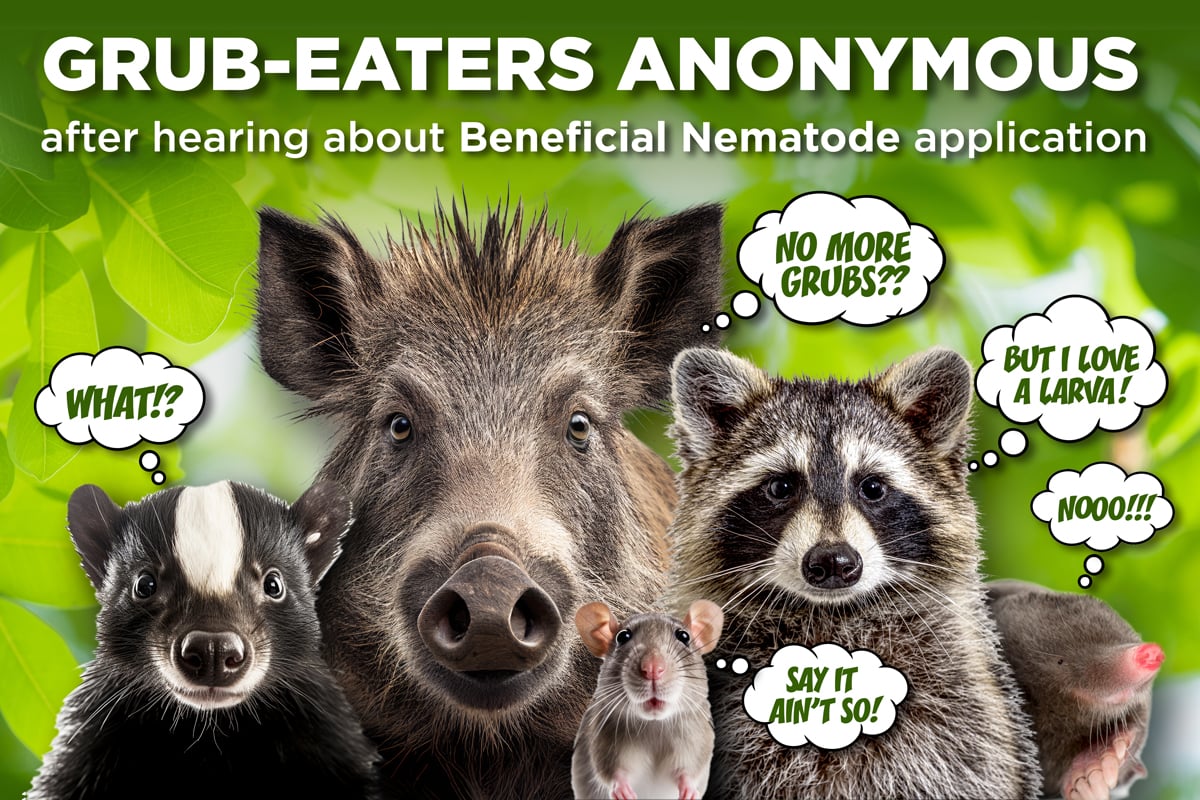
Grubs feed on grass roots and can weaken lawns, but they also attract moles, raccoons, skunks, and other digging animals looking for an easy meal.
By helping control grubs and other soil-dwelling pests, beneficial nematodes can help reduce the food sources that attract unwanted visitors in the first place.
Healthy soil supports healthy roots.
Healthy roots support healthy plants.
Managing pests early helps protect the entire system.
What Pests Do Beneficial Nematodes Help Control?
Beneficial nematodes can help manage a wide range of common soil-dwelling pests (over 230, in fact!), including:
- Grubs and beetle larvae
- Fungus gnat larvae
- Root weevils
- Cutworms
- Various soil-dwelling pest insects
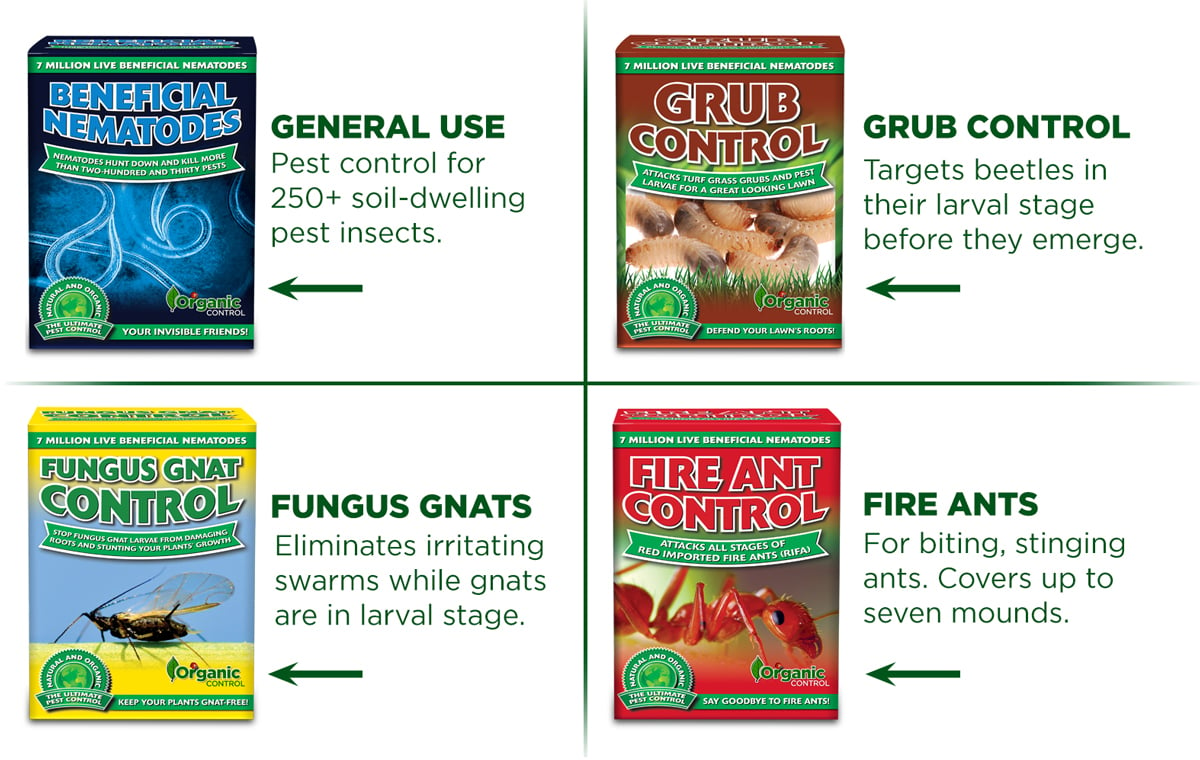
Different beneficial nematode formulations are available for different pest challenges, making them one of the most versatile tools available to gardeners looking for natural pest control solutions.
Why Gardeners Have Trusted Them for Decades
Beneficial nematodes aren’t new.
Gardeners, growers, and landscape professionals have relied on them for decades because they offer a simple, effective, and natural approach to pest management.
Benefits include:
✓ Covers up to 2,000 square feet
✓ Long-lasting protection under the right conditions
✓ Safe for people, pets, plants, and pollinators
✓ Easy to apply with water
✓ Works naturally within the soil ecosystem

How to Apply Beneficial Nematodes
Applying beneficial nematodes is simple:
- Mix with water according to package directions.
- Apply directly to the soil.
- Water lightly after application.
- Keep soil moist for several days to help them establish.
For best results, apply according to package directions.

Ready to Put Your Soil to Work?
Healthy gardens don’t happen by accident.
They start with healthy soil—and one of the simplest ways to support that foundation is by introducing beneficial organisms that work where many pest problems begin.
Find Beneficial Nematodes Near You
Organic Control offers beneficial nematode solutions for a variety of common garden challenges, including grubs, fungus gnats, fire ants, and hundreds of other soil-dwelling pests.
Ready to protect your yard from the ground up?
Use our store locator to find Organic Control beneficial nematodes at a garden center near you—and take the first step toward preventing problems before they start.